Plumbing
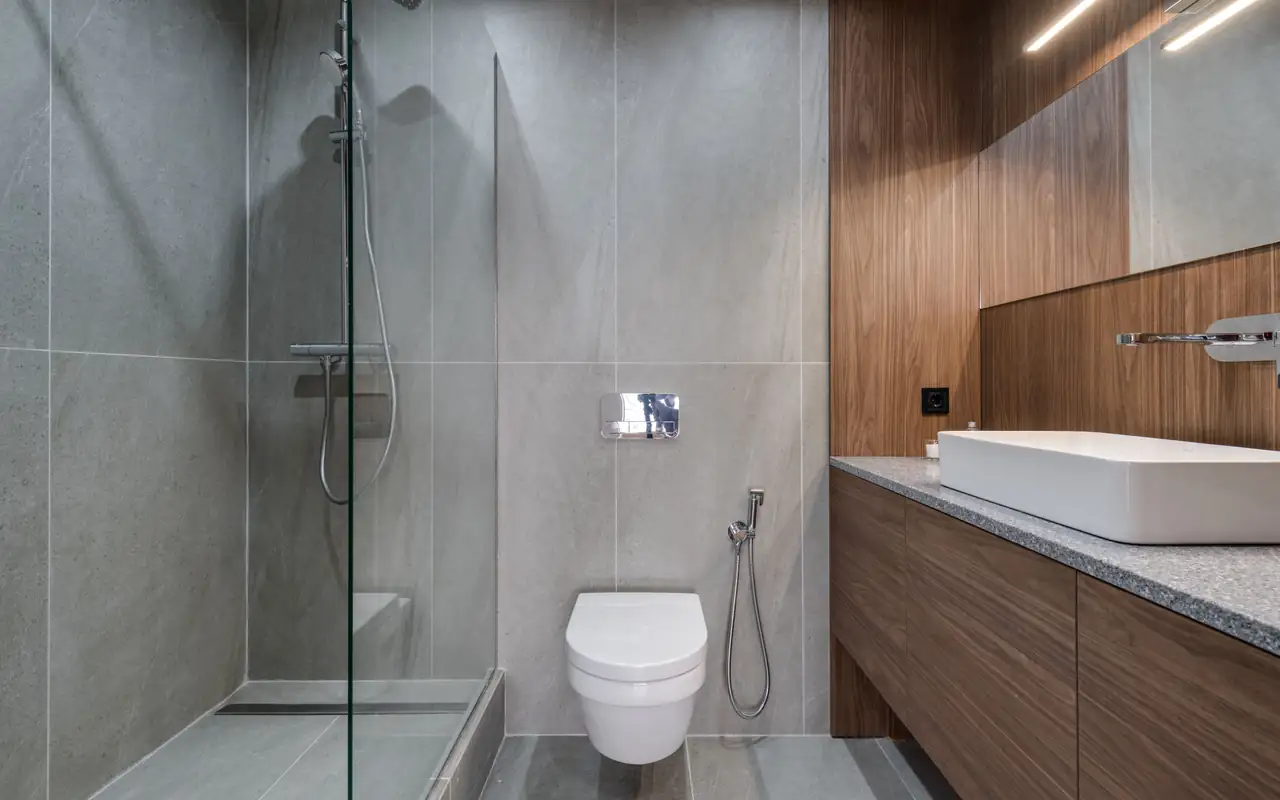
Shower Installation & Wet Rooms in North West London
We fit electric, mixer and pumped showers and build wet rooms, after measuring your water pressure and flow so the shower you choose actually performs.
- Free, no-obligation quotes
- Same-day emergencies, Mon to Sat
- Price confirmed before we attend
- Certificates and repairs on one account
- Flow testedPressure and flow measured before we advise
- Circuits notifiedNew shower circuits notified, certificate handed over
- Tanked firstMembrane on before tiles, every time

In short
Which type of shower should I install?
Choose by your hot water system and your mains flow. A combi boiler or unvented cylinder with good flow suits a mains-pressure mixer. A gravity-fed cylinder with a loft tank suits a pumped power shower. Weak or unreliable hot water suits an electric shower, which heats cold mains water itself. We measure before recommending.
Picking the shower first and the water system second is the most common reason a new shower disappoints.
The wider service is on our Plumber & Plumbing Work page.
What you get
What a shower installation includes
A shower matched to your water system, fitted and tested, with the Electrical Installation Certificate for any new circuit and the shower area tanked behind the tiles.
- Static pressure and flow measured at the property before we advise
- Thermostatic valve, riser or fixed head, and isolation valves for servicing
- Dedicated circuit for an electric shower, sized to its rating and certified
- Pump selection and positioning for gravity-fed systems
- Tray, former or wet-room floor laid to fall, with the waste tested
- Tanking membrane before tiling, then sealant to every junction
How it works
- We ask what heats your water and test the mains pressure and flow at the property
- We recommend a shower type and model range that suits those figures, in writing
- First fix: supplies, waste and any new electrical circuit, tested before they are covered
- Tray or wet-room floor, boarding and tanking, then tiling or wall panels
- Second fix, temperature and flow checked at the head, electrical certificate issued
Electric, mixer or power shower: what is the difference?
The difference is where the hot water comes from and what pushes it out of the head.
- Electric shower: takes cold mains water and heats it as it flows. It works with any boiler, even one that has failed, but flow drops in winter because the heater has colder water to warm. It needs its own heavy-duty circuit.
- Mixer shower on mains pressure: blends hot and cold from a combi boiler or unvented cylinder. Good flow, provided the mains and the boiler or cylinder can deliver it.
- Mixer shower on gravity: blends hot from a vented cylinder and cold from the loft tank. Pressure depends on the height of the tank above the head, so it is often weak on the first floor.
- Power shower or pumped mixer: a gravity system with a pump added. Strong, but it empties the hot cylinder faster and is only for tank-fed systems.
- Digital shower: a mixer with an electronic valve and remote controls, available for both gravity and mains-pressure systems in different versions.
How do you check water pressure and flow before fitting a shower?
We measure two things: static pressure with a gauge on a tap, and flow in litres per minute, timing how fast a container fills from the cold tap with nothing else running. Pressure alone tells you little. A house can show good pressure on a gauge and still deliver poor flow through a narrow, old supply pipe. With a combi boiler, the hot side is limited by the boiler's output as well as the mains. A combi can run one good shower, but rarely a shower and a bath tap at once.
With an unvented cylinder, the cylinder maker states a minimum incoming pressure and flow. Below that, the shower will be disappointing whatever you spend on the valve. With a gravity system, the height of the cold tank sets the pressure. That is when a pump earns its place. We write the figures on the quote, so you can see why we recommended a particular type.
Is a shower pump allowed on the mains?
Most shower pumps are designed for tank-fed systems only and must not be connected to the mains. Mains booster pumps exist, but they are a different product. Under the Water Supply (Water Fittings) Regulations 1999, a pump or booster drawing more than 12 litres per minute, connected directly or indirectly to a supply pipe, needs notice to the water company and its consent before work starts.
The company has ten working days to refuse or set conditions. If low mains pressure is the problem, the better answers are usually different. Check that the stopcock is fully open and that the supply pipe is not undersized or furred up. Otherwise choose an electric shower, which needs less flow.
What does an electric shower need from the electrics?
An electric shower needs its own circuit straight from the consumer unit, with cable and a protective device sized to its rating, and RCD protection. Electric showers are rated in kilowatts. A 9.5 kW model draws roughly 41 amps at 230 volts, far more than any other single appliance in most homes. A new shower circuit is notifiable under Part P of the Building Regulations. So is altering an existing circuit within the shower's special location, the zone around the tray up to 2.25 metres high. The work is certified by a registered electrician to BS 7671, or checked by building control.
Replacing a shower like for like on a sound existing circuit is a replacement, and Approved Document P does not treat replacements as notifiable. The catch is upgrading. Swapping an 8.5 kW unit for a 10.5 kW one on the old cable can overload it. We check the cable size, the protective device and the consumer unit before we fit a more powerful model. Sometimes the main fuse is the limit.
What makes a wet room different from a shower with a tray?
In a wet room the floor itself is the shower tray, so the whole floor has to fall to the drain and the whole floor has to be waterproof. A tray contains the water. A wet room relies entirely on the build-up beneath the tiles. That means a sloped former or screed laid to fall towards a gully or linear drain, with a membrane over the whole floor, lapped up the walls and sealed around the drain body. On a timber first floor the joists must be stiff enough not to flex, because flexing cracks grout and tears membranes.
The waste needs enough depth below the floor to fall to the stack. That is often the deciding factor in an upstairs flat or over a ground-floor ceiling. We flood-test the membrane before any tile goes on. Water should go to the drain and nowhere else, and we photograph the result. A screen at the wet end keeps the rest of the room dry. Without one, the whole room is wet after every shower.
Should a rental shower be thermostatic?
In a rental, yes. No general rule requires it for an existing home, but it is the sensible default. A thermostatic valve holds the outlet temperature steady when someone flushes a WC or runs a tap. It also cuts out if the cold supply fails, which is when scalds happen. The Building Regulations limit hot water to a bath to 48°C, and only in new homes or those formed by a change of use. There is no equivalent limit for showers in existing homes.
Where tenants are vulnerable, the HSE's health and social care guidance says baths and showers should have thermostatic mixing valves so water does not exceed 44°C, and those valves should be maintained. That guidance covers care settings, hostels and supported housing. For an ordinary let it is a useful benchmark, not a legal duty. The HSE also notes that instantaneous electric showers pose less legionella risk because they are usually cold-fed. Whatever the type, tenants should clean and descale the shower head regularly.
What affects the price of a shower installation?
The type you choose and what the house needs to support it. An electric shower on a new circuit needs a cable run from the consumer unit, and sometimes a consumer unit upgrade. A pumped shower needs a pump position and its own supply. A wet room costs more than a tray because the whole floor is rebuilt, laid to fall and waterproofed. Swapping a shower like for like on existing pipework and wiring is the simplest job.
Certificates and defined jobs are a fixed price confirmed before we attend; repairs are charged by the hour, with the rate and an estimate confirmed before we attend.
Where we fit showers
From Kenton Lane we fit showers across Harrow, Kenton, Stanmore and Edgware, and in Wembley, Pinner, Kingsbury, Hendon and the surrounding areas. Many interwar houses here still have a vented cylinder and a loft tank, which is when a pump or an electric shower makes sense. Affinity Water supplies most of the area, and the water is very hard, so we fit heads and valves that are easy to descale.
Plumbing by area: Plumbers in Harrow, Plumbers in Kenton, Plumbers in Stanmore, Plumbers in Edgware, Plumbers in Bushey, Plumbers in Colindale, Plumbers in Hendon, Plumbers in Mill Hill, Plumbers in Northolt, Plumbers in Northwood, Plumbers in Pinner, Plumbers in Ruislip and Plumbers in Wembley.
What we do not do
We do not install, move or repair gas boilers, so if a combi needs replacing to support a better shower, that goes to a Gas Safe registered engineer. We do not treat damp caused by a long-term shower leak beyond repairing the leak itself. If the floor structure under a planned wet room is weak, we will advise a structural check rather than build over it.
Why people trust us
- Repairs tested before we leave, and the area left clean
- A walk-in office on Kenton Lane, not a serviced address
- We diagnose first and tell you what we have found before doing more
- A time slot rather than a morning-or-afternoon window
- Work photographed before and after, and reported
- We tell you when you do not need something we sell
We are building a review profile under this name and would rather show you none than borrow someone else's. Ask us for references from landlords and we will put you in touch.
Official sources
- GOV.UK: Electrical safety, Approved Document P (2013 edition)
- legislation.gov.uk: Water Supply (Water Fittings) Regulations 1999, regulation 5
- GOV.UK: Sanitation, hot water safety and water efficiency, Approved Document G
- HSE: Scalding and burning in health and social care
- HSE: Legionnaires' disease, landlords' responsibilities
Last reviewed October 2026 by EliteShires Property Services.
Related
Often booked alongside
-
Bathroom fitting
We strip out and refit bathrooms, en-suites and cloakrooms with our own plumbers, electricians, tilers and decorators, against one written specification.
-
Unvented cylinders
We install, replace and service unvented hot water cylinders, with the mains measured first, the safety devices fitted and set, and new installations notified under the Building Regulations.
-
Tiling
Walls and floors, wet areas properly tanked, and grout and silicone that does not fail in a year.
-
Electricians
Fault finding, consumer units, rewires, sockets, lighting and EICR remedial work, with the certificate for the work issued on completion.
-
Leak detection
Ceiling stains, damp floors, a rising water bill or a boiler that keeps losing pressure: we trace the leak by testing, open up as little as possible and repair it.
-
Consumer unit replacement
Old fuse boxes replaced with a modern consumer unit, every circuit tested before and after, and the certificate and Building Control notification handled for you.
Shower installation: common questions
Not answered here? Call 0203 667 1333 and ask.
Can I put an electric shower where the old one was?
Usually, if the existing circuit is sound and suits the new shower's rating. A like-for-like replacement is not notifiable under Part P. If the new unit is more powerful, the cable and protective device may need upgrading, and a new circuit is notifiable. We check the cable size and the consumer unit before quoting.
Why is my new mixer shower weak?
Usually the water system cannot supply what the shower needs. On a gravity system, the cold tank may be too close above the head. On a combi or unvented cylinder, mains flow may be low or shared with other outlets. A blocked head or a partly closed isolation valve is also common in hard-water areas. We measure the flow and work back to the cause.
Can I have a power shower with a combi boiler?
Not in the usual sense. Power shower pumps are for tank-fed systems and must not be fitted to a combi or a mains supply. A combi already delivers mains pressure. If the flow is poor, the limits are the mains supply and the boiler's output. A mains booster pump needs water company consent above 12 litres per minute.
How long does it take to install a shower?
Replacing an electric shower or a mixer valve on existing pipework can often be done in a day. A new shower with a new circuit, tray and tiling takes longer, because the area is tanked and tiled, and tiling a bathroom typically takes two to three days. A wet room takes longest. We give you a programme with the quote.
Do I need building regulations approval for a new shower?
The electrical side often needs notification. A new circuit for an electric shower is notifiable under Part P: it is either self-certified by an electrician registered with a competent person scheme or notified to building control before work starts, and you get the Electrical Installation Certificate either way. Moving plumbing and adding drainage can also need approval.
Is a wet room a good idea in a rental?
It can be, especially for older or less mobile tenants who struggle with a bath. It needs to be built properly, with a full membrane, a floor laid to fall and a good fan, and a screen keeps the rest of the room dry. A low-profile tray with a level entry gives similar access with less risk and is easier to repair between tenancies.
Do you fit shower screens and enclosures?
Yes, as part of the installation. We check the tray and the walls are true first, because an enclosure fitted to an out-of-square wall leaks at the seal. Screens are fixed into solid backing or the correct fixings for the board, and sealed after the tiling has cured.
Book a shower installation
Most quotes are settled on a two-minute call. Or send the form and we will call you back.
0203 667 1333 Or WhatsApp us on 07534 813123- We confirm the quote for your property
- We book a time slot that suits you or your tenant
- The work is done, tested and photographed
Visit the office
EliteShires Property Services
6 Station Parade, Kenton Lane
Harrow HA3 8SB
Call or WhatsApp
Opening hours
Mon – Fri · 8:00 – 18:00
Saturday · 9:00 – 16:30
Sunday · Emergencies only