Electrical work
Consumer Unit & Fuse Box Replacement in North West London
Old fuse boxes replaced with a modern consumer unit, every circuit tested before and after, and the certificate and Building Control notification handled for you.
- Free, no-obligation quotes
- Same-day emergencies, Mon to Sat
- Price confirmed before we attend
- Certificates and repairs on one account
- Tested firstCircuits checked before the old board comes out
- CertifiedInstallation certificate and Building Control notice
- Landlord deadlinesPlanned around the 28-day EICR window

In short
What does a consumer unit replacement involve?
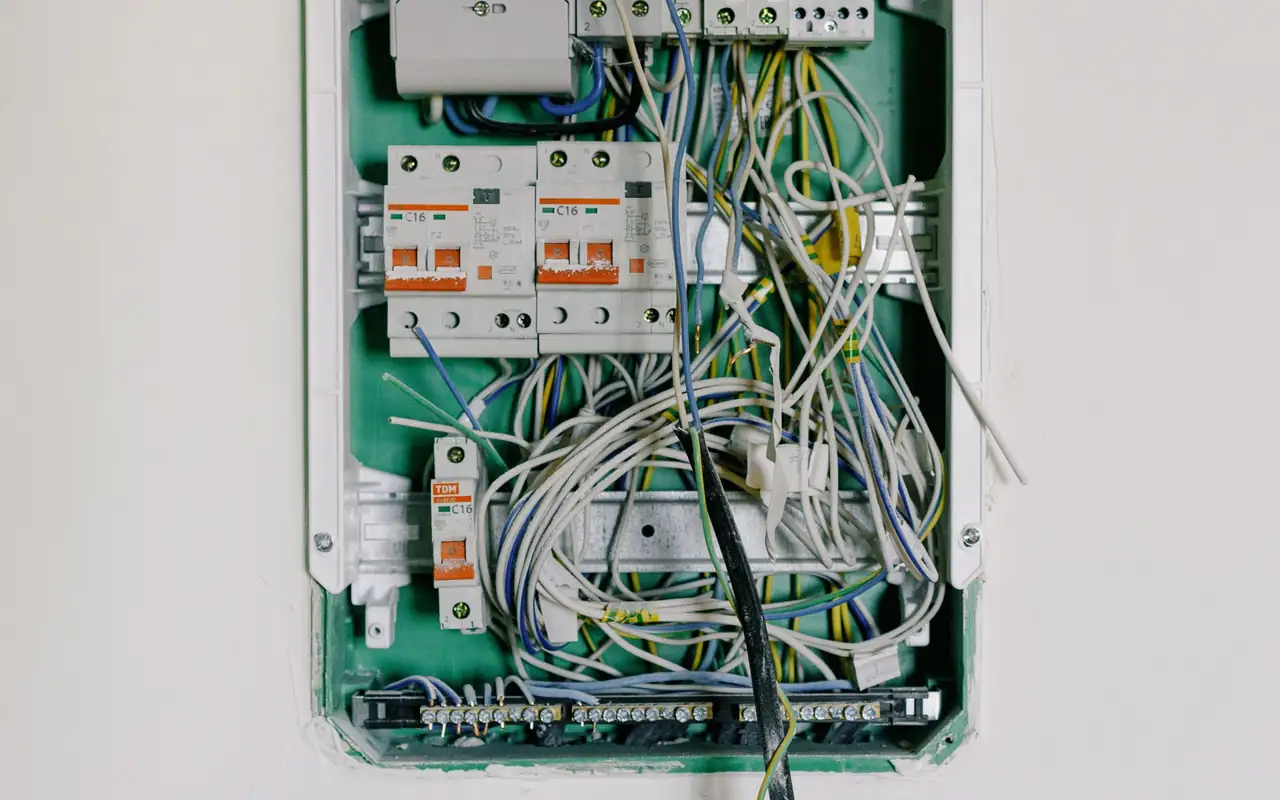
A consumer unit replacement swaps the old fuse box for a new board in a non-combustible, usually steel, enclosure, with RCD protection on every circuit. A good electrician tests the existing circuits first, checks the earthing and bonding, fits and tests the new board, then issues an Electrical Installation Certificate and notifies Building Control.
In most homes it is a one-visit job with the power off for much of the day. The time depends on how many circuits there are and what the testing finds.
The wider service is on our Electrician & Electrical Work page.
What you get
What the job includes
A new consumer unit built to the current edition of the Wiring Regulations, a labelled circuit chart, an Electrical Installation Certificate, and the Building Regulations compliance certificate that follows notification.
- Insulation resistance testing of every existing circuit before the swap
- Checking the main earth and the bonding to gas and water pipes
- A new board in a non-combustible enclosure, with RCD or RCBO protection
- Surge protection and arc fault detection considered and recorded in the design
- Every circuit labelled, with a printed circuit chart in the door
- Full testing after the swap, with results recorded on the certificate
- Notification to Building Control, with the Building Regulations certificate passed on to you
How it works
- We look at the board and the installation, or read your recent EICR, and confirm a fixed price
- On the day we test every circuit before anything is disconnected
- Anything the tests turn up is explained before we go further
- The old board comes out, the new one goes in, and each circuit is reconnected and tested
- Power goes back on circuit by circuit, and we show you how the new board works
- The certificate follows, and the work is notified to Building Control
When does a fuse box actually need replacing?
A fuse box needs replacing when it is unsafe, damaged, or cannot give the protection the circuits now need. Age alone is not enough. Electrical Safety First says older units may not have an RCD or circuit breakers, and that this does not automatically make them unsafe, although it recommends upgrading a board with no RCD. The usual reasons to replace are these.
- An EICR has coded a board-related defect as C1 or C2, such as missing RCD protection for bathroom sockets or sockets likely to power equipment outdoors
- The board shows heat damage, scorching or cracking, or a device is under a safety recall
- A new circuit is needed, for a shower, an extension, a kitchen or an EV charger, and the old board has no space or no suitable protection
- Rewireable fuses have been bodged with the wrong fuse wire, and the board cannot be trusted
- The installation is being partly rewired anyway, and the board is the obvious place to start
What goes into a modern consumer unit?
A new board is built to BS 7671:2018+A4:2026, the current edition of the Wiring Regulations. It was published on 15 April 2026, and the previous version is withdrawn on 15 October 2026. Since 1 January 2016, consumer units in homes have had to be made of non-combustible material, or housed in a non-combustible enclosure. The aim is to contain a fire caused by a poor connection, and steel is the usual answer. Inside, the main choice is how the RCD protection is arranged. A dual-RCD board splits the circuits into two groups, each behind one RCD. That works, but one faulty appliance can switch off half the house, kitchen and freezer included. An RCBO board gives each circuit its own combined breaker and RCD, so a fault only takes out its own circuit.
RCBOs cost more per way, and in a let property or a home with a freezer or a home office they are usually worth it. The design also has to decide on surge protection and arc fault detection. The current edition requires arc fault detection devices on certain circuits in high-rise residential buildings, defined as over 18 metres or more than six storeys. In a typical house it is a design decision, and for an HMO or a block of flats we check the requirement for that building. Either way, the certificate records what was fitted and why.
Why do we test before the old board comes out?
Because a new board can expose faults the old one was hiding. A rewireable fuse board with no RCD does not notice small leaks to earth, or a neutral shared between two circuits. Fit an RCD and those faults start tripping it straight away. Without a test first, the new board gets the blame. So we test the insulation of every circuit, and check the main earth and the bonding to the gas and water pipes, before anything is disconnected. Most of the time the results are clean and the job goes ahead as quoted.
If a circuit has a fault, such as damaged cable or a borrowed neutral, we show you the reading and explain the fix before doing more. You decide, with the facts in front of you, rather than finding a dead circuit on a new board at five o'clock. Missing or undersized main bonding can usually be put right on the same visit where we can reach the pipes. It is often a C2 on the same report that flagged the board.
Is a consumer unit replacement notifiable?
Yes. GOV.UK lists replacing a fuse box and the connected electrics as work that may need Building Regulations approval. You do not have to apply yourself if the work is done by someone registered with a competent person scheme, who can self-certify it. Under regulation 20 of the Building Regulations 2010, the person doing the work must, within 30 days of completion, give the occupier a copy of the compliance certificate and give Building Control notice of the work.
In practice you receive two documents: the Electrical Installation Certificate from the electrician, and the Building Regulations compliance certificate issued through the scheme. Keep both. A buyer's conveyancer will ask for them, and a landlord will want them on file with the EICR.
What happens on the day?
Expect the power to be off for most of the job. We restore it in stages once each circuit has tested clean. Empty the freezer or keep it shut, and charge laptops and phones the night before. If anyone at home depends on powered medical equipment, tell us when you book so we can plan the order of work around it. We need clear access to the board and the meter, plus room to work.
If the board is in a cupboard full of coats or behind shoes under the stairs, please clear it the evening before. Mains-wired smoke alarms will sound briefly when the power returns, which is normal. If the board has to move, for example out of a damp cupboard or to a more accessible wall, that is quoted separately because it means extending cables and making good.
How do landlords fit a board change into the 28 days?
Book it the day the EICR arrives. The Electrical Safety Standards in the Private Rented Sector (England) Regulations 2020 require remedial work within 28 days of the inspection, or sooner if the report says so. Written confirmation must then go to the tenant and the local housing authority within 28 days of the work being finished. The clock runs from the inspection date, not the date you read the report.
Parts for an RCBO board are usually in stock, but the tenant needs notice, and a working day without power needs agreeing with them. We arrange access with the tenant directly, send you the certificate and our written confirmation, and you forward them. If the inspector also coded the bonding or a damaged accessory, we price those on the same visit so there is one day of disruption, not three.
What affects the price of a fuse box replacement?
Mostly the installation itself, which is why we look before we price it. The number of circuits sets the size of the board and the number of protective devices. RCBOs on every circuit cost more than a dual-RCD layout. Surge protection adds a device. Earthing or bonding upgrades, faults found in the pre-swap testing, and moving the board all add work.
Worn or undersized meter tails may need replacing too, and if that needs the network operator to remove its sealed fuse, it adds a booking. Once we have seen the board, or a recent EICR and a photo, the price is fixed and confirmed before we attend.
Certificates and defined jobs are a fixed price confirmed before we attend; repairs are charged by the hour, with the rate and an estimate confirmed before we attend.
Consumer units across Harrow, Kenton, Stanmore and Edgware
We replace boards across Harrow, Kenton, Stanmore and Edgware, and out to Wembley, Pinner, Wealdstone, Mill Hill, Ruislip and the rest of our area. A lot of the housing here is interwar, rewired once or twice since, so mixed cable ages behind one board are common. That is why testing comes first. In converted houses and flats over shops, the board is sometimes in a communal cupboard. Tell us where it is and who holds the key.
Electricians by area: Electrical work in Harrow, Electrical work in Kenton, Electrical work in Stanmore, Electrical work in Edgware, Electrical work in Bushey, Electrical work in Colindale, Electrical work in Hendon, Electrical work in Mill Hill, Electrical work in Northolt, Electrical work in Northwood, Electrical work in Pinner, Electrical work in Ruislip and Electrical work in Wembley.
What we will not do
We will not fit a new board onto circuits that fail their tests without telling you. We do not fit second-hand or unbranded boards, or mix devices from different makers in one board. We will not swap a board on an installation with no working earth until the earthing is sorted. If the cable throughout the house is the problem, a board change will not fix it, and we will tell you so and price a rewire instead.
Why people trust us
- Work by registered electricians, certified, and notified to Building Control where the job requires it
- A walk-in office on Kenton Lane, not a serviced address
- The fault found and the options explained before we go further
- A time slot rather than a morning-or-afternoon window
- Work photographed before and after, and reported
- We tell you when you do not need something we sell
We are building a review profile under this name and would rather show you none than borrow someone else's. Ask us for references from landlords and we will put you in touch.
Official sources
- GOV.UK: When you need building regulations approval (replacing fuse boxes)
- legislation.gov.uk: Building Regulations 2010, regulation 20 (self-certification, 30 days)
- legislation.gov.uk: Electrical Safety Standards in the Private Rented Sector (England) Regulations 2020, regulation 3
- BEAMA technical bulletin: Enhanced fire safety for consumer units, regulation 421.1.201 (June 2015)
- NICEIC: BS 7671 Amendment 4
- Electrical Safety First: Fuseboxes and RCDs explained
Last reviewed October 2026 by EliteShires Property Services.
Related
Often booked alongside
-
House rewiring
Full and partial rewires for homes and empty lets, quoted only when the testing shows the cable needs it, with the plaster and decorating put right afterwards by our own trades.
-
Emergency electrician
Same-day emergency call-outs in opening hours for tripping switches, dead circuits, burning smells and water in the electrics, made safe first and then properly repaired.
-
EICR Certificates
A full inspection and test of the fixed electrical installation, with a clear report and a fixed price for any remedial work.
-
EV charger installation
We survey your supply, then fit and certify a smart home charger on its own circuit, with the network operator notified and the paperwork handed over.
-
Landlord certificates
Every safety certificate a let property needs, booked as one coordinated visit, with the paperwork sent together and the renewal dates kept for you.
-
Shower installation
We fit electric, mixer and pumped showers and build wet rooms, after measuring your water pressure and flow so the shower you choose actually performs.
From our guides
Read before you book
Plain-English guides, checked against the official sources. More landlord guides
Electrical safety
EIC vs EICR: which electrical certificate do you need?
An EIC certifies new electrical work, a Minor Works Certificate covers small alterations and an EICR reports on an existing installation. Which one you need.
Electrical safety
After EICR remedial work: the paperwork to get and send
After EICR remedial work, get a certificate and written confirmation, then send both with the report to tenants and the council within 28 days.
Consumer unit replacement: common questions
Not answered here? Call 0203 667 1333 and ask.
How long does a consumer unit replacement take?
For a typical house or flat it is a single visit, with the power off for much of the day. A board with more circuits takes longer, as does one where the pre-swap testing finds a fault to put right. Moving the board to a new position adds time. We give you a realistic plan for the day when we confirm the price.
Can a fuse box be replaced without rewiring the house?
Usually, yes. Most board changes reconnect the existing circuits to the new consumer unit. That is only right if those circuits test healthy, which is why we test them first. If the cable insulation is breaking down throughout, a new board will not cure it, and a rewire or partial rewire is the honest answer.
Is a plastic consumer unit illegal?
No. The non-combustible enclosure rule applies to consumer units installed in homes from 1 January 2016. It does not require existing plastic boards to be ripped out. An inspector may recommend improvement for a plastic board in a risky position, such as under a wooden staircase, but that does not make the installation unsafe or illegal.
Why does my new consumer unit keep tripping?
Usually because the RCD protection the old board lacked is now picking up a fault that was there all along: a leaking appliance, a damp outside light, or a neutral shared between circuits. Testing before the swap catches most of these. If it happens after a board change, unplug everything on that circuit and reset, then call the installer back to trace it.
What is the difference between an RCD and an RCBO?
An RCD detects current leaking to earth and switches off everything behind it. An RCBO combines that with a circuit breaker for one circuit only. With RCDs, one fault can take out a group of circuits. With RCBOs, it only takes out its own. RCBO boards cost more but cause less disruption when something trips.
Do I need a new consumer unit for an EV charger?
Not always. A charger needs its own circuit and suitable protection, so the question is whether the existing board has a spare way and the right type of protection, and whether the supply can carry the extra load. Sometimes a separate small enclosure next to the board is enough. We check the board and supply before you buy the charger.
Will I get a certificate?
Yes, two. You get an Electrical Installation Certificate with the test results for the new board and its circuits. The work is also notified to Building Control, and the compliance certificate follows within 30 days of completion. Keep both with the property documents.
Does a landlord have to replace an old fuse box?
Only if it makes the installation unsafe. The 2020 regulations require the installation to meet the electrical safety standards, judged by an inspection. If the EICR codes a board-related defect as C1 or C2, the fix is due within 28 days of the inspection, or sooner if the report says so. A board that only attracts a C3 recommendation does not have to be replaced.
Get a fixed price for a new consumer unit
Most quotes are settled on a two-minute call. Or send the form and we will call you back.
0203 667 1333 Or WhatsApp us on 07534 813123- We confirm the quote for your property
- We book a time slot that suits you or your tenant
- The work is done, tested and certified
Visit the office
EliteShires Property Services
6 Station Parade, Kenton Lane
Harrow HA3 8SB
Call or WhatsApp
Opening hours
Mon – Fri · 8:00 – 18:00
Saturday · 9:00 – 16:30
Sunday · Emergencies only