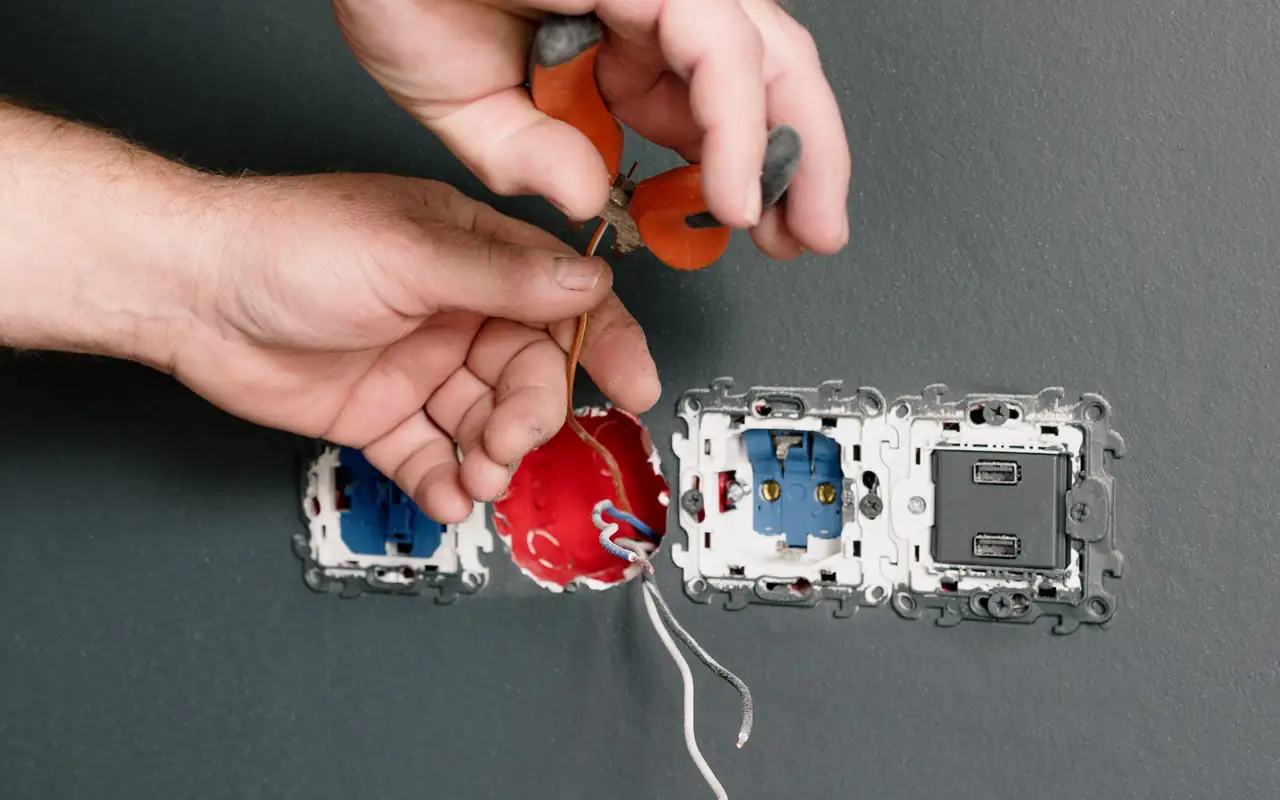
EICR
EICR & Electrical Safety Certificates across North West London
A full inspection and test of the fixed electrical installation, with a clear report and a fixed price for any remedial work.
- Free, no-obligation quotes
- EICR report within 48 hours
- Price confirmed before we attend
- Certificates and repairs on one account
- Who needs onePrivate landlords in England (some exclusions, such as lodgers and leases of 7+ years)
- How oftenAt least every 5 years, or sooner if the report says
- Copy to tenantsWithin 28 days of the inspection; new tenants before they move in

In short
What is an EICR electrical safety certificate, and how often do landlords need one?
An Electrical Installation Condition Report (EICR), the document most people call a landlord electrical safety certificate, is an inspection and test of a property's fixed wiring, consumer unit and accessories. Private landlords in England need one at least every five years, with a copy to tenants within 28 days. Any C1 or C2 code makes the report unsatisfactory; an FI on its own no longer does, and a C3 does not. EliteShires Property Services carries out EICRs in Harrow, with the report issued within 48 hours.
What you get
What is included
A compliant Electrical Installation Condition Report, a plain explanation of what each code actually means for you, and a fixed price for any work, with no obligation to have us do it.
- Inspection and testing of the fixed electrical installation
- Consumer unit, earthing and bonding assessed
- Dead and live testing of every circuit
- Every observation coded C1, C2, C3 or FI with an explanation
- A clear satisfactory or unsatisfactory outcome
- A written quote for any remedial work, itemised against the codes
How it works
- We confirm the price from the size of the property and the number of circuits
- We attend and test (two to four hours for a typical flat or house)
- Anything immediately dangerous is made safe on the day
- You get the report to pass to your tenants within 28 days, and if work is needed, a line-by-line quote against it
- Remedial work is booked, completed and certified within the 28 days, and we diary the five-year renewal
Most people calling about an EICR are in one of two positions: the five years are up and a letting agent is chasing, or a report has come back unsatisfactory and there is now a 28-day clock running on remedial work that somebody wants to charge a great deal of money for.
Since April 2021 every private rented property in England has needed its fixed electrical installation inspected and tested at least every five years, with any remedial work the report calls for completed within 28 days. It is the certificate landlords most often get wrong, because an unsatisfactory report starts that 28-day clock, and because a cheap inspection that codes everything as a fault is a very effective way of selling you rewiring you do not need.
EICR at a glance
| Who needs one | Private landlords in England (some exclusions, such as lodgers and leases of 7+ years) |
|---|---|
| How often | At least every 5 years, or sooner if the report says |
| Copy to tenants | Within 28 days of the inspection; new tenants before they move in |
| If unsatisfactory | Remedial work within 28 days |
| Maximum penalty | £40,000 per breach |
| What fails a report | C1 or C2 codes, not C3 (an FI alone no longer does) |
| Visit length | 2–4 hours for a typical flat or house |
| Report | Within 48 hours |
What affects the price?
The number of circuits, which broadly tracks the size of the property. A two-bedroom flat with eight circuits is a very different job from a detached house with thirty, an outbuilding supply and two consumer units. Older installations also take longer, because more of what is found needs investigating rather than simply recording.
Certificates and defined jobs are a fixed price confirmed before we attend; repairs are charged by the hour, with the rate and an estimate confirmed before we attend.
Often booked with EICR
- Remedial electrical work
- PAT testing for supplied appliances
- The ten-year EPC
- Consumer unit replacement
- House rewiring
- Smoke alarm installation
- Emergency electrician
- The EICR, gas check and EPC in one visit
Not sure which certificates apply? Use our landlord certificate checker.
The full guide to EICR
What does the law require?
The Electrical Safety Standards in the Private Rented Sector (England) Regulations 2020, amended in 2025 to cover social housing as well, require the fixed electrical installation in a rented property to be inspected and tested at least every five years by a qualified and competent person. The requirement applied to new tenancies from July 2020 and to all existing tenancies from April 2021. You must give a copy of the report to existing tenants within 28 days of the inspection, to a new tenant before they occupy, to a prospective tenant within 28 days of them asking, and to the local authority within seven days if it asks. A few arrangements are outside the rules, including lodgers who share with the landlord and leases of seven years or more.
What do C1, C2, C3 and FI mean?
This is where landlords are most often misled. A C1 means danger is present and there is a risk of injury. That needs making safe immediately. A C2 means potentially dangerous. An FI means further investigation is advised. Any C1 or C2 makes the report unsatisfactory, and remedial work has to be completed within 28 days or sooner if the report specifies. Under BS 7671 Amendment 4, an FI code on its own no longer makes the overall result unsatisfactory; if the report says further investigation is required, the 2020 regulations still give you 28 days. A C3, by contrast, is only an improvement recommendation. It does not make the installation unsatisfactory and it does not require work. If an inspector tells you a report full of C3s means you need a rewire, get a second opinion.
What does an EICR inspect?
The consumer unit and its protective devices, the earthing and bonding arrangements, the condition of the fixed wiring, socket outlets, switches, lighting points and any fixed appliances, plus dead and live testing of the circuits: continuity, insulation resistance, polarity, earth fault loop impedance and RCD operation. The result is a report with observations, codes and a clear satisfactory or unsatisfactory conclusion.
Remedial work, priced before it starts
If work is needed you get a written quote against the specific coded observations before anything is done, and you are free to have someone else carry it out. We would rather quote a job and lose it than produce a report designed to generate one. Where a C1 is found we will make the installation safe on the day, because leaving a known danger in place is not an option, and we will tell you what that involves before we do it.
When is the next EICR due?
Five years from the last inspection, or sooner if the report sets a shorter interval. We diary the renewal date and remind you before it expires, because letting a property without a current inspection is a breach the local authority can penalise directly. If you hold several properties we will put them on a single schedule so the certificates do not all fall due in the same month.
More in our guide to how long an EICR lasts.
Who is this for?
Private landlords, letting and managing agents, and homeowners who want the installation checked before buying, selling or renovating.
Which mistakes do we see most often?
By far the most common is accepting that a report full of C3 codes requires work. It does not. C3 is an improvement recommendation and does not make an installation unsatisfactory. The second is choosing the cheapest inspection available, which frequently produces the longest list of coded observations and a quote to match. The third is leaving remedial work until day twenty-seven of the twenty-eight, then discovering the parts are not in stock.
Why people trust us
- Inspection and testing by registered electricians, with every observation coded and explained
- A walk-in office on Kenton Lane, not a serviced address
- Anything immediately dangerous made safe on the day
- A time slot rather than a morning-or-afternoon window
- Work photographed before and after, and reported
- We tell you when you do not need something we sell
We are building a review profile under this name and would rather show you none than borrow someone else's. Ask us for references from landlords and we will put you in touch.
Official sources
- GOV.UK: Electrical safety standards in the private and social rented sectors, guidance
- legislation.gov.uk: Electrical Safety Standards Regulations 2020, regulation 11 (financial penalties)
- legislation.gov.uk: SI 2025/1043, amending regulations (penalty raised to £40,000; extension to social housing)
Last reviewed September 2026 by EliteShires Property Services.
Specific jobs
EICR Certificates: the jobs we do most
Each has its own page with what is included, how it is done and what affects the price.
-
Commercial EICR
Periodic inspection and testing of the fixed wiring in shops, offices, clinics and mixed-use buildings, planned around your trading hours, with the report within 48 hours.
-
Not sure what you need?
Tell us about the property and we will tell you which certificates and trades apply, and what they cost.
Where we work
EICR Certificates in your area
Local housing changes the job, so each area has its own page.


Book an EICR by town
From our guides
Guides on this
Plain-English guides on EICR, checked against the official sources. All landlord guides
Electrical safety
How long does an EICR last? Validity, expiry and retests
A landlord's EICR lasts up to five years, or less if the report sets an earlier date. Owner-occupiers are advised every 10 years. Expiry and retests covered.

Certificates
Landlord safety certificates in England: 2026 checklist
Every safety certificate and check a landlord in England needs in 2026: gas, EICR, EPC, alarms, legionella and PAT, plus Harrow, Brent and Barnet licensing.
Electrical safety
EIC vs EICR: which electrical certificate do you need?
An EIC certifies new electrical work, a Minor Works Certificate covers small alterations and an EICR reports on an existing installation. Which one you need.

Electrical Installation Condition Report (EICR): common questions
Not answered here? Call 0203 667 1333 and ask.
Is an EICR the same as an electrical safety certificate?
Yes, in practice. There is no separate document called an electrical safety certificate for a rented home: the legal requirement is a satisfactory Electrical Installation Condition Report, and that is what agents and tenants mean when they ask for one. Do not confuse it with an Electrical Installation Certificate (EIC), which is issued when new wiring or a new consumer unit is installed, or with PAT testing of appliances.
More in our guide to the difference between an EIC and an EICR.
How often does an EICR need doing?
At least every five years for private rented property in England, or sooner if the report itself specifies a shorter interval. It also needs to be in place before a new tenant occupies.
My report has lots of C3 codes. Do I have to do the work?
No. A C3 is an improvement recommendation only. It does not make the report unsatisfactory and it does not trigger the 28-day remedial requirement. Only C1 and C2 observations do, along with any further investigation the report says is required. Anyone telling you otherwise is either mistaken or selling you something.
What happens if my report is unsatisfactory?
Remedial work must be completed within 28 days, or sooner if the report specifies. You then need written confirmation that the work is done, which goes to your tenant and to the local authority within 28 days of the work being completed. We will quote the specific coded items so you can see exactly what is required and what is optional.
More in our guide to the paperwork after EICR remedial work.
How long does the inspection take?
Typically two to four hours for a flat or small house, longer for larger properties or older installations. The power has to be off for parts of the testing, so it is worth warning the tenant.
Is an EICR the same as a PAT test?
No. An EICR covers the fixed installation: the wiring, consumer unit and accessories. PAT testing covers portable appliances that plug in. Landlords of furnished property often need both, and they are separate pieces of work.
What affects the price of an EICR in London?
The number of circuits, which broadly follows the size of the property, and the age of the installation, because older wiring usually has more to investigate rather than simply record. An outbuilding supply or a second consumer unit adds time too. The postcode makes little difference, which is why quoted prices across London vary so widely. We confirm a fixed price for your property before we attend, and the quote is free. A very cheap inspection is worth questioning: it is often recovered through a long list of remedial work.
Can a landlord be fined for not having an EICR?
Yes. The local authority can impose a financial penalty of up to £40,000 per breach under regulation 11 of the Electrical Safety Standards in the Private Rented Sector (England) Regulations 2020, as amended by SI 2025/1043. The maximum was £30,000 until that amendment. The council can also arrange remedial work itself and recover the cost from you.
More in our guide to landlord fines for gas, EICR, EPC and alarm breaches.
Do I have to give my tenant a copy of the EICR?
Yes. Existing tenants must get a copy within 28 days of the inspection, a new tenant before they move in, and a prospective tenant within 28 days of asking for one. The local authority can ask for a copy too, and you then have seven days to provide it.
Book an EICR
Most quotes are settled on a two-minute call. Or send the form and we will call you back.
0203 667 1333 Or WhatsApp us on 07534 813123- We confirm the quote for your property
- We book a time slot that suits you or your tenant
- The installation is tested and the report issued
Visit the office
EliteShires Property Services
6 Station Parade, Kenton Lane
Harrow HA3 8SB
Call or WhatsApp
Opening hours
Mon – Fri · 8:00 – 18:00
Saturday · 9:00 – 16:30
Sunday · Emergencies only