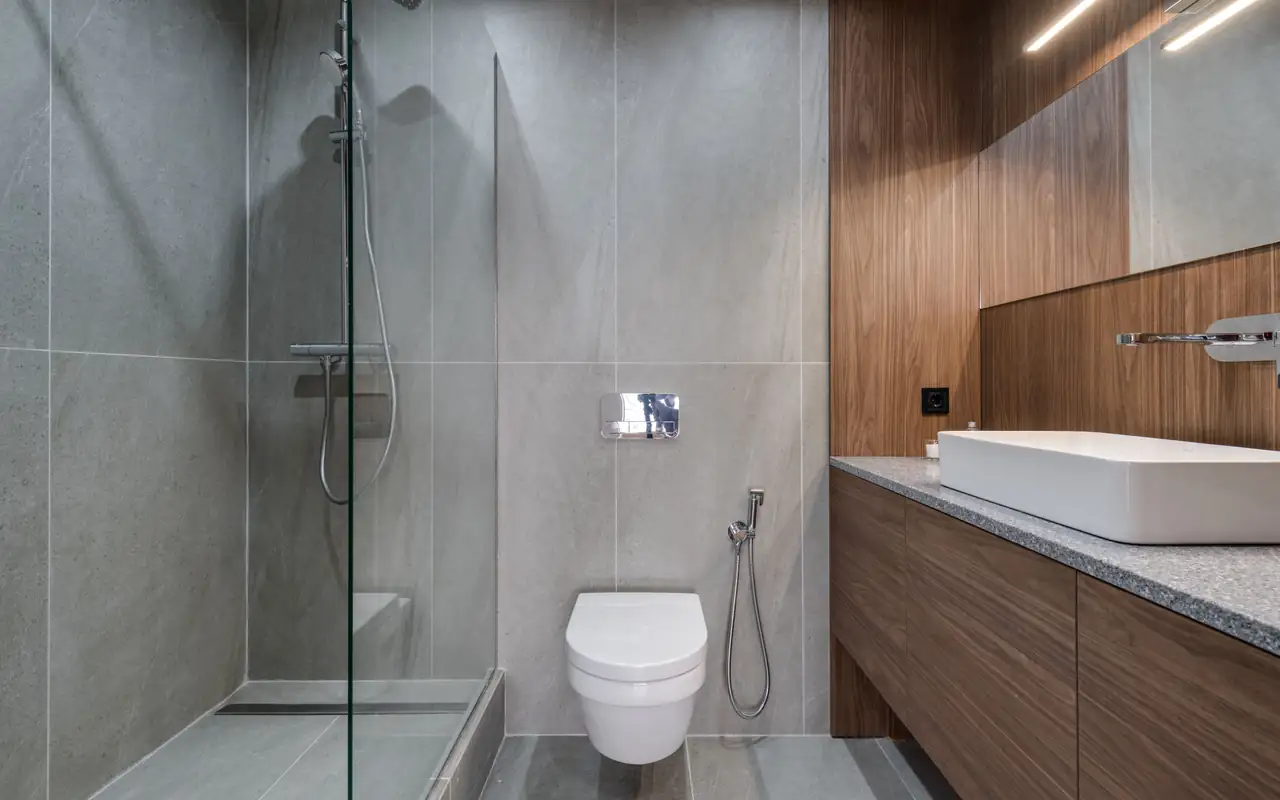
Wembley, HA9, HA0
Legionella Risk Assessments in Wembley
Written legionella assessments for Wembley lets, based on the water that actually arrives in the Wembley supply zone and the system in your property.
- Free, no-obligation quotes
- Written assessment on the day
- Price confirmed before we attend
- Certificates and repairs on one account
- On the dayWritten assessment at the visit
- Price firstConfirmed before we attend
- HA9, HA0Wembley postcodes

In short
Do Wembley landlords need a legionella certificate?
No. There is no such certificate. HSE says landlords must assess and control the risk, and most can do it themselves. Wembley adds two local factors: cold mains that reached 24.5°C in Affinity Water's 2025 sampling, and hard water that scales shower heads. We assess on the day at a fixed price confirmed before we attend.
You get a written assessment with the controls that suit your property, which is useful evidence if a tenant, agent or insurer asks what you have done.
The full guide is on our Legionella Risk Assessment page, and everything else we do locally is under landlord certificates and repairs in Wembley.
Legionella Risk Assessments in Wembley: what is different here
What Affinity's Wembley zone figures mean for risk
Wembley's water comes from Affinity Water's Wembley supply zone, AF062, which served a population of 61,209 in 2025. Across 157 temperature samples that year, the water ranged from 7.3°C to 24.5°C, with a mean of 15.4°C. HSE says legionella grows between 20°C and 45°C and that cold water should be kept below 20°C. So on a warm summer day, mains water can already be above that line as it enters a Wembley property, before it has sat in a warm riser or a loft tank.
The same report gave hardness of 295 mg/l, and scale inside shower heads and mixing valves gives bacteria a surface to hold on to.
Flats in heated towers near the stadium
In a Wembley Park tower, the communal tanks, booster pumps and risers are the building's responsibility and fall under the freeholder's own water risk assessment. Yours covers the flat. The local risk there is heat: cold pipes run through warm ceiling voids and service cupboards beside heating pipework, and in summer the cold tap can run warm for some time.
We measure how long each cold outlet takes to fall below 20°C and each hot outlet to reach 50°C, check little-used outlets such as a second shower room, and look at the thermostatic mixer. If the cold supply stays warm, we record it for the managing agent rather than treat it as your fault.
Cylinders and loft tanks in interwar houses
Many of the gas-heated semis in Tokyngton and Barnhill, and around Preston Road and North Wembley, still have a hot water cylinder and a cold water tank in the loft, or had them until a combi went in. Stored hot water should reach 60°C, a loft tank needs a tight lid and insulation to keep out debris and summer heat, and pipes left behind after a combi conversion can become dead legs where water sits.
Hard water makes the first of those harder, because scale on an immersion element or cylinder coil slows heating. We look at all three and write down what needs changing.
Event lets and voids that sit empty
A flat let only on stadium weekends, or a house empty between tenancies, is the classic case HSE warns about: water standing in pipes and shower hoses. HSE's advice is that outlets in a vacant property should be used at least once a week, and that the system should be flushed before it is occupied again. For short lets we write a simple flushing routine for the cleaner to follow between guests, and for voids we include it in the assessment so the agent can tick it off.
What Brent's licences say, and do not say
Neither Brent's selective conditions nor its HMO conditions mention legionella by name. The duty comes from health and safety law and HSE's guidance, and recording findings is not always required. The HMO conditions do require hot and cold water to be constant and available at every bath, shower and basin, so a system run cold to save energy, or left with a failed immersion, can become a licence matter too, particularly in the shared houses of Wembley Central and Wembley Hill.
A written assessment shows a Brent inspector, or a tenant, that the risk has been considered.
Official sources
- Wembley zone AF062 temperature, hardness and population, Affinity Water 2025
- HSE on landlords' legionella duties and the absence of a certificate
- HSE temperature benchmarks for hot and cold water
- Brent HMO amenity standards on hot and cold water supplies
- Gas-heated homes in Tokyngton and Barnhill, Census 2021
Last reviewed October 2026 by EliteShires Property Services.
Price and booking
Certificates and defined jobs are a fixed price confirmed before we attend; repairs are charged by the hour, with the rate and an estimate confirmed before we attend. On our legionella risk assessments page: what a visit includes, step by step.
Every job is photographed before and after, and you get a time slot rather than a morning-or-afternoon window.
Related in Wembley: gas safety certificates, PAT testing, EPC and EICR.
Also nearby: legionella assessments in Kenton, and in Harrow and Stanmore.
Legionella Risk Assessments in Wembley: your questions
Not answered here? Call 0203 667 1333 and ask.
Do I need a legionella certificate to license my Wembley HMO?
No. HSE states that the law does not require landlords to obtain a legionella test certificate, and Brent's licence conditions do not ask for one. You need to assess and control the risk. A written assessment is the usual way to show you have done that.
Is Wembley's water a higher legionella risk than elsewhere?
The water is safe to drink, but two features matter for assessment. Affinity's 2025 samples for the Wembley zone reached 24.5°C, above HSE's 20°C cold water benchmark, and the water is hard at 295 mg/l. Both point to keeping cold pipes cool and descaling shower heads.
My Wembley Park flat's water comes from the building's tanks. What does my assessment cover?
The outlets, mixers and pipework inside your flat, and how quickly they reach safe temperatures. The building's tanks and pumps belong to the freeholder's own assessment. If your flat's cold supply runs warm, we note it so you can raise it with the managing agent.
How should I prepare a Barn Hill house that has stood empty between tenants?
Run every tap and shower for a few minutes, starting nearest the incoming supply, and avoid breathing in spray from the shower head. Heat the cylinder to 60°C and check the loft tank lid. We can do the flush during the assessment visit if you prefer.
Do you take water samples?
Not usually. HSE says sampling is not normally needed for domestic lets. We measure temperatures at each outlet and check the system, which is what the assessment relies on. If something unusual turns up, we tell you whether specialist sampling is worth considering.
What should I tell short-let guests?
Very little. A note to run the shower for a minute before using it after the property has been empty is enough. The flushing routine between guests sits with you or your cleaner, and it is set out in the assessment.
Book legionella risk assessments in Wembley
Most quotes are settled on a two-minute call. Or send the form and we will call you back.
0203 667 1333 Or WhatsApp us on 07534 813123- We confirm the quote for your property
- We book a time slot that suits you or your tenant
- The water system is assessed and the written record issued
Visit the office
EliteShires Property Services
6 Station Parade, Kenton Lane
Harrow HA3 8SB
Call or WhatsApp
Opening hours
Mon – Fri · 8:00 – 18:00
Saturday · 9:00 – 16:30
Sunday · Emergencies only